What Do Today's AI Advances Really Look Like?
AI can take over your daily activities
Let me start with the uncomfortable part: yes, it can. And with a good chunk of those tasks it will be faster and cheaper than you. I am not saying that to sell panic. I have spent enough time working with these tools to know exactly where they shine and where they fall flat on their face.
Everyone keeps asking the same question: "is AI going to take my job?" I think that is the wrong question. The better one stings a little more: how much of what you did yesterday was actual professional judgment, and how much was filler?
Be honest for a second. Copying numbers from an email into a spreadsheet. Answering the same customer question for the tenth time. Hunting for the file you swore you saved properly. Writing a paragraph nobody was ever going to read closely. That is not your talent. That is a toll you pay. And a machine pays that toll without complaining.
Today's AI advances do not look like science fiction, and that is the point
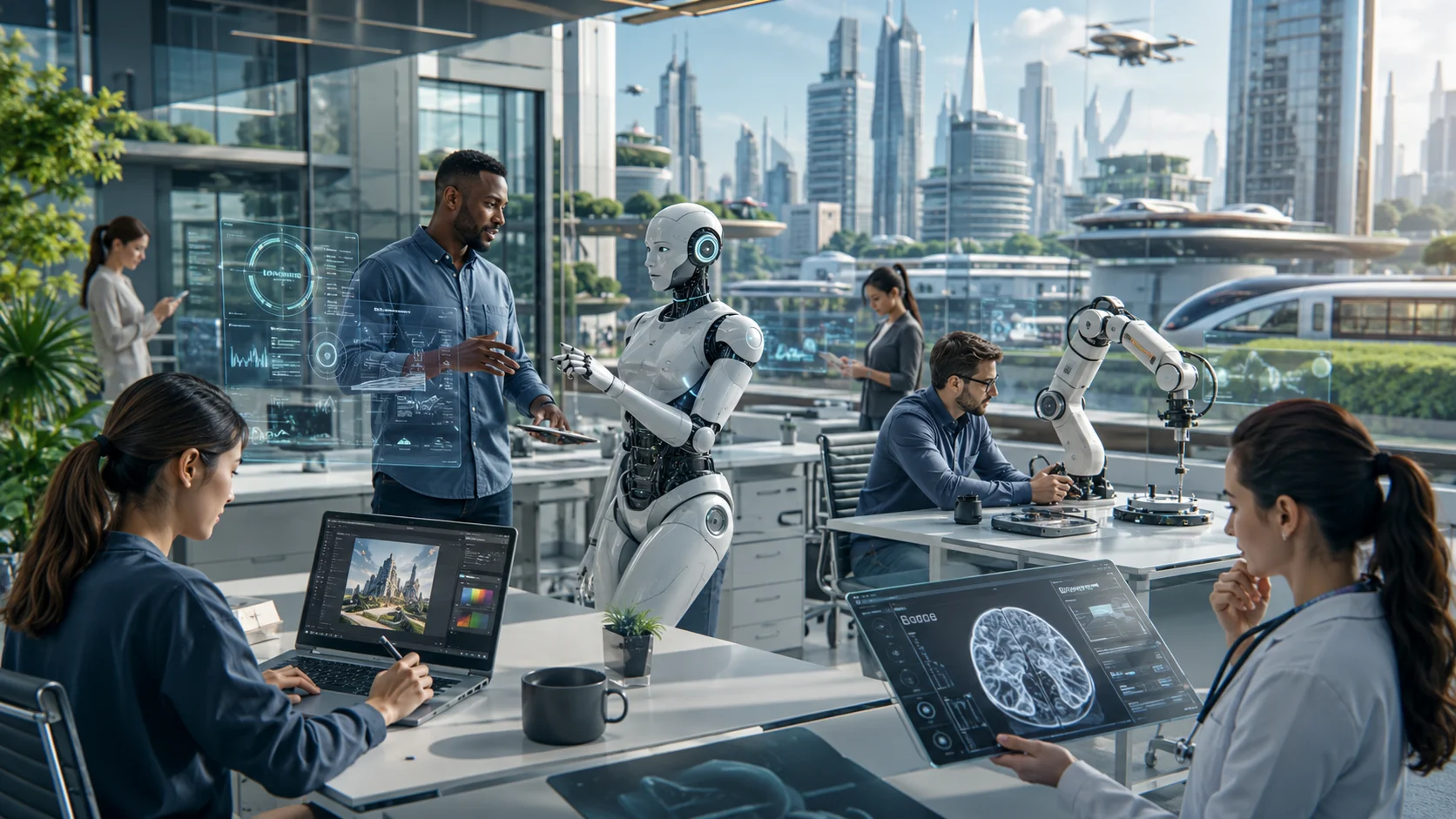
If you were waiting for robots walking down the street, reality is far more boring. AI slipped into the grey parts of the day: the filter that dumps spam, the route Maps reshuffles because of traffic, the product the store suggests, the meeting summary that writes itself, the assistant that drafts an email in thirty seconds.
That is why almost nobody noticed. The technology did not arrive with trumpets. It arrived with an app update. One day your keyboard started guessing better and you did not celebrate, you just kept typing.
You already use it, even if you say you don't
When your bank texts you about a strange charge, there is a model behind it. When your phone recognises your face in the dark, there is a model behind it. When a search engine understands your badly typed question and answers it anyway, there is a model behind it. Every one of those decisions used to be human work not that long ago. Nobody marched in the streets when it disappeared.
What AI does better than you, and you should hand over today
There are three kinds of tasks where competing against a machine is a waste of your afternoon. I say this with affection.
1. Repetitive work with clear rules
Sorting emails, pulling data out of invoices, transcribing audio, cleaning a messy database, renaming a hundred files, spinning up twenty headline variations so you can test which one lands. These jobs demand patience, not intelligence. You get sloppy around file number thirty. The machine does not.
2. The first draft of almost anything
The blank page stopped being a problem. A decent draft in sixty seconds beats two hours of watching the cursor blink. But notice the word I used: draft. Publishing that thing untouched is the fastest way to sound exactly like the other forty articles on the same topic.
3. Searching inside your own mess
This is the one that surprised me most in real work. Being able to ask questions of your own contracts, reports and meeting notes instead of opening them one by one changes the shape of the whole day. It is not magic. It is simply not losing forty minutes looking for a paragraph you knew existed.
What AI cannot do, and is nowhere close to doing
This is where the doomsday speech collapses, and where the vendor hype collapses too.
AI has no skin in the game. If the advice goes wrong, it answers to nobody. It does not lose the client, it does not lose sleep, it does not lose the reputation that took you years to build. You do.
It also has no human context. It does not know that the client who wrote at eleven at night is angry about something that happened three months ago and only found the excuse today. It does not know that the cheap supplier let you down in December. It does not know when to shut up.
And there is a worse problem that rarely gets mentioned: it is brilliant at sounding confident while being wrong. A hesitant human hesitates, and you can hear it. A model hands you an invented fact with exactly the same calm tone it uses for a correct one. That extra confidence is, right now, its most expensive flaw.
The real risk is not replacement. It is going rusty.
This part is my opinion, and you will not find it in any tool's brochure.
Delegate the wrong muscle and it wastes away. If you never write anything yourself again, you stop thinking through writing, which is where half your ideas actually get organised. If you never check a number by hand, you lose the instinct that tells you when a number smells wrong. If the model writes every proposal you send, one day you will be in a room with no screen, nothing to say, and a very honest look on your face.
Automate what you already know how to do. Think twice before automating what you are still learning to do.
That is the line. AI is a multiplier. If you know your field, it makes you dangerously fast. If you don't, it multiplies your ignorance and publishes it with excellent spelling.
Three questions to decide what to hand over
When I am not sure, I run a task through these. They work for an office job, a small shop or a full agency.
- If this goes wrong, who pays for it? When the cost is high (client money, health, anything legal, your reputation) the machine proposes and you decide. No exceptions.
- Does this task make me better at something? If it trains your judgment, do it yourself even when it is slow. If it only drains you, hand it over without guilt.
- Can I review the output faster than I can produce it? If checking costs more than doing, you automated nothing. You just changed jobs.
A one week test, no speeches
If you want to bring this down to earth, try this. For five days write down every task that takes you more than fifteen minutes. By Friday you will have an ugly and very revealing list.
Mark the ones that are repetitive and low risk. Those are your candidates. Pick one, the most annoying one, and give it a two week trial with whatever tool you already have. One. Not ten. People who try to automate everything on Monday are usually doing everything by hand again by Thursday.
Measure something simple: minutes saved and mistakes made. If you save time and break nothing, keep it. If not, kill it without sentiment and try the next one.
So, is it going to replace you?
You, probably not. Your to-do list, largely yes, and honestly the sooner the better.
The fashionable line says AI will not replace you, but someone using AI will. It is catchy and it is half true. The other half is that plenty of people will "use AI" to produce twice as much mediocre content, twice as many empty emails and twice as many reports nobody reads. Volume is not an advantage. Deciding what deserves to exist in the first place is still a human job, and that is where your attention is worth spending.
AI can take over your daily activities. The question you are left with is simpler and more serious: once it gives those hours back, what are you going to spend them on?
Frequently asked questions about AI and daily work
Which tasks are most exposed to automation?
Anything with predictable input, clear rules and a verifiable output: data entry, classification, transcription, answering FAQs, first drafts and routine reporting. The less ambiguity and the lower the consequences, the easier it is to hand over.
Do I need to be technical to start using AI?
No. You need to be clear. The skill that separates people who get good results from people who get frustrated is not coding. It is explaining context, goal, format and constraints properly. It is the same skill you use when you delegate something to a new assistant.
Does Google punish content written with AI?
Google does not penalise the tool, it penalises content made without judgment purely to farm clicks. If the text carries real experience, concrete examples and an actual point of view, it performs. If it is recycled filler, it does not matter who wrote it. It will not stay at the top for long.
Where should I start tomorrow?
With the task that bores you most and carries the least risk. Give it two weeks, measure minutes and mistakes, and keep only what genuinely gives you time back. Starting small is the only approach that consistently works.
Comments
Be the first to comment.